
Organic Egyptian Walking Onion Sets

Out of stock
Don't miss out! Sign up to be notified when this product is back in stock!
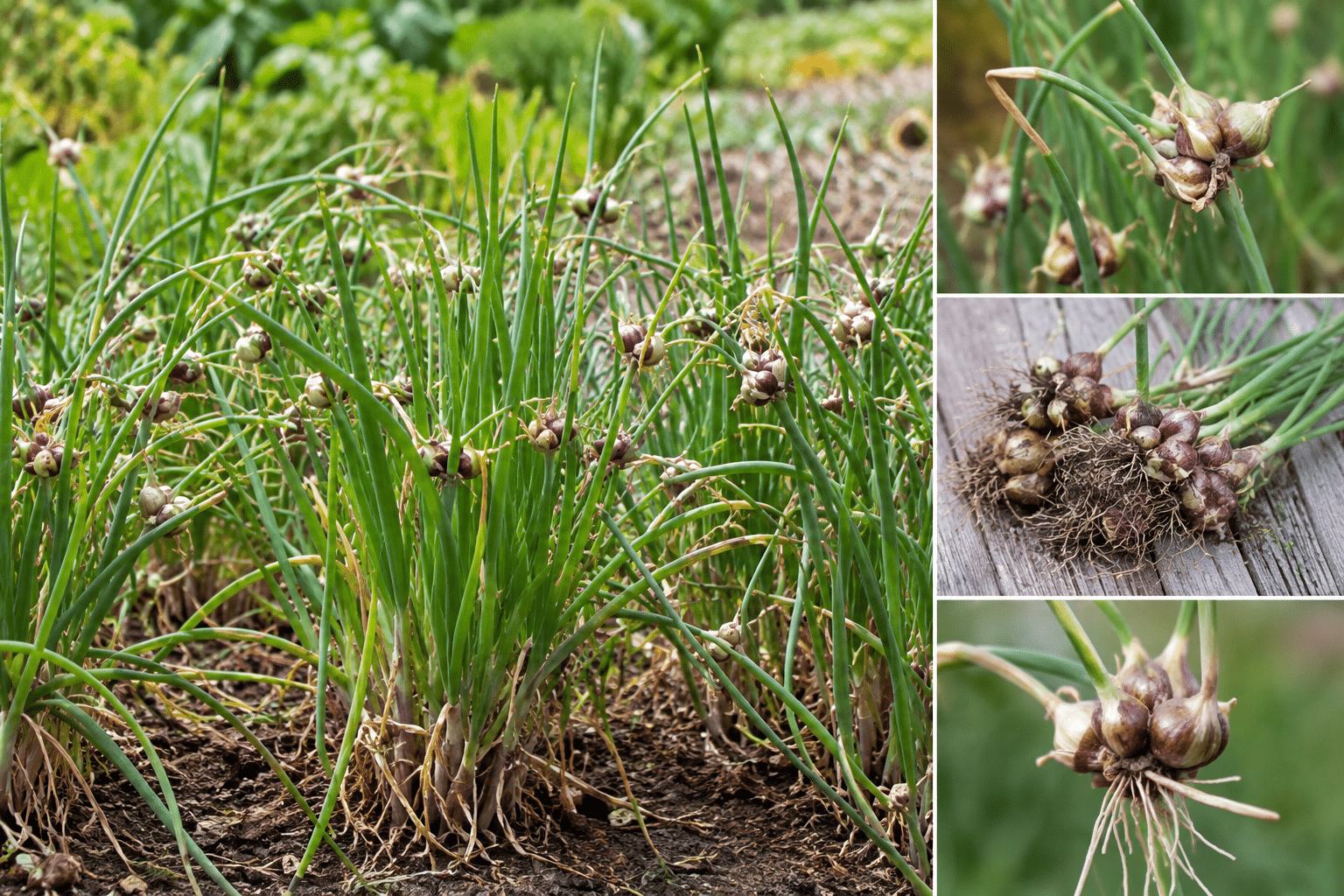
Onion sets are live seasonal product with limited availability. These hardy perennial onions produce edible green tops, underground bulbs, and clusters of bulbils that “walk” across the garden as they root and spread.

Product Information
Egyptian Walking onions sets produce unique perennial onions prized for their hardiness, productivity, and distinctive growth habit. Instead of producing typical flowers and seeds, they form clusters of small bulbils at the top of their stalks, which bend to the ground and root, causing the onions to “walk” across the garden over time. The green tops, top bulbils, and underground bulbs are all edible, offering a robust onion flavor. Known for their reliable year-round growth, they are easy to grow and highly productive.
What are Onion Sets?
Onion sets are small, immature onion bulbs (or bulbils) that are grown from seed the previous year and then stored over winter for planting. When planted, they quickly develop into full-sized onions because they are already partially grown.
These organic onion sets are live, seasonal items that should be planted as soon as possible. When your onion sets arrive, the main goal is to keep them cool, dry, and healthy until planting so they don’t sprout too early or rot. First, open the packaging right away and spread the sets out in a single layer in a well-ventilated, dry place (like a countertop, tray, or mesh bag). Avoid sealing them in plastic or leaving them in a warm spot, since trapped moisture and heat can cause mold or premature sprouting. If you can’t plant them within a few days, store them in a cool, dark, airy location—ideally around 40–50°F.
Planting by Zones
Zones 9-10
-
Onion sets are planted in the fall through late spring in Zones 9 and 10, where winters are mild and growing conditions allow for steady development.
Zones 2-8
- Plant onion sets directly into the garden in early spring as soon as the soil can be worked. The plants themselves are hardy perennials that can survive very cold winters.
Planting Egyptian Walking Onion Sets
- In Zones 9 and 10, plant onion sets directly into prepared garden soil.
- Press sets into loose, moist, high-quality garden soil so that the bulb top is just at or slightly above soil level.
- Once shoots are 3–4″ tall, apply an organic liquid fertilizer to encourage strong early growth.
- Space onion sets about 6–12″ apart.
Growing Egyptian Walking Onion
- For the best growth, plant them in well-drained soil with plenty of sunlight.
- These hardy perennials form dense clumps and spread by underground division while also producing small bulbils at the tops of their stalks that can root and grow into new plants. Grow them in a dedicated garden area where they may spread.
- Keep plants healthy and thriving by dividing clumps every few years.
Harvesting Egyptian Walking Onions
- Harvest year-round as desired to enjoy the green stems (green onions), top bulbils, or the underground bulbs.
Growing Onions in Containers
- Egyptian Walking onions are well suited for container growing. Use a container at least 12–14 inches deep with enough space for the plants to spread. Keep in mind that containers dry out more quickly due to increased surface exposure and limited soil volume for moisture retention. Apply a heavy layer of mulch to help retain moisture and regulate soil temperature.
Southern California Pro-tips
- Mulch heavily around your plants to ensure the soil does not dry out or heat.
Companion Flowers/Crops
- Onions are a long-term crop and should be planted in an area where other crops can be planted between or with them. We like growing our onions next to quick growing crops like radishes, lettuces, and beets. We harvest those crops 3–4 times before the onions are ready.
Additional Learning Resources
- New to starting crops from seeds? Please watch our Seed Starting Presentation to learn the basics!
- Learn about growing all our crops on our YouTube page!
- Having pest issues? Check out in-depth information of pests that can be an issue for onions at the UC Integrated Pest Management site.
Reviews
There are no reviews yet.