
St. John's Fire Salvia
| Quantity | Discount (%) |
|---|---|
| 2+ | 10% |
| 5+ | 15% |
| 20+ | 20% |
In stock
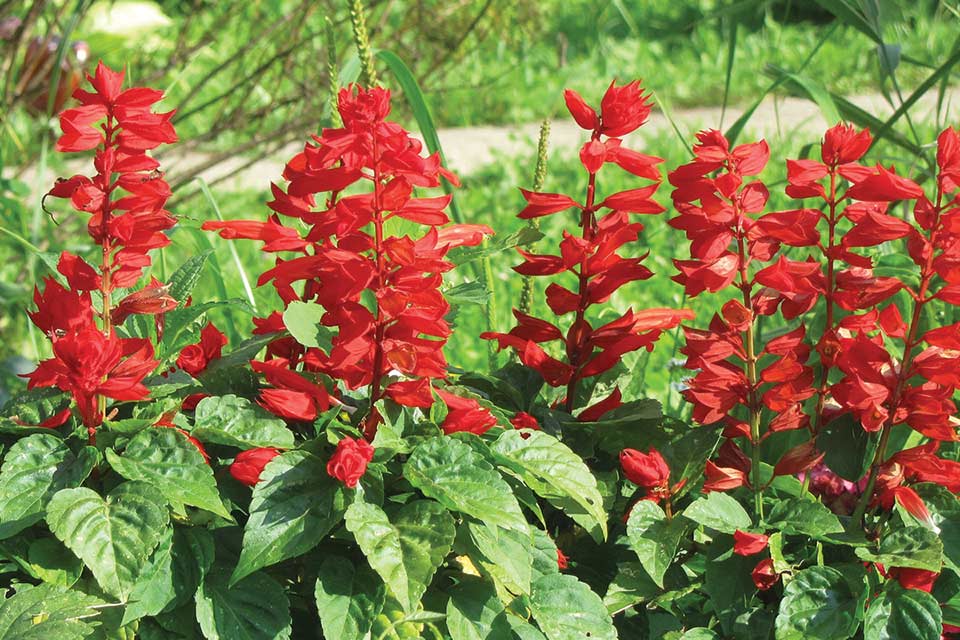
This stunning compact salvia produces deep red spikes of flowers on dark green foliage, a hummingbird favorite! The heat-tolerant plants bloom early and continue well into the fall. Make a bold statement in your garden by planting en masse; perfect for borders and containers, too!
Product Information
This stunning compact salvia produces deep red spikes of flowers on dark green foliage, a hummingbird favorite! The heat-tolerant plants bloom early and continue well into the fall. Make a bold statement in your garden by planting en masse; perfect for borders and containers, too!
Planting by Zones
Zones 9-10
- Salvia is a warm-season plant that thrives in sunny locations with well-drained soil. In Zones 9 and 10, salvia can be planted outdoors once the soil temperature reaches at least 65°F. These regions allow for multiple planting periods, typically in spring or early summer. With proper care, many salvia varieties can bloom continuously throughout the season and even overwinter in milder climates.
Zones 2-8
- Start salvia seeds indoors 6-8 weeks before the last frost. Transplant seedlings outdoors after the danger of frost has passed and the soil has warmed to 65°F or higher. If purchasing nursery plants, wait until consistent warm weather to plant them out.
Planting Salvia
- Zones 9-10: Direct sowing or transplanting seedlings works well.
- To direct sow, plant seeds in well-prepared, moist soil. Cover seeds lightly with a thin layer of finely sifted soil (about 1/8 inch).
- For starting seeds in containers, use a high-quality seed-starting mix. Place seeds on moist soil and lightly cover. Keep the soil consistently moist until germination.
- Once seedlings have 2-3 sets of true leaves, transplant them into the garden, spacing plants 12-18 inches apart, depending on the variety.
Growing Salvia
- Salvia thrives in sunny locations with well-drained, moderately fertile soil.
- In Zones 9 and 10, adding organic matter, such as compost, improves soil structure and retains moisture.
- Mulching heavily around plants helps maintain soil temperature, retain moisture, and suppress weeds.
- Deadheading spent blooms encourages continuous flowering.
Harvesting Salvia
- Harvest leaves and flowers early in the morning, once the dew has dried.
- For culinary or medicinal use, select young, tender leaves for optimal flavor and potency.
- Regular harvesting prevents the plant from becoming leggy and encourages fresh growth.
Growing Salvia in Containers
- Salvia adapts well to container gardening. Choose a pot at least 12-16 inches deep with good drainage.
- Use a high-quality potting mix and ensure consistent moisture without overwatering.
- Mulching the container’s top layer helps retain moisture and regulate temperature.
- Fertilize lightly with an organic liquid fertilizer once plants are established.
Southern California Pro-tips
- Mulch heavily to keep soil temperatures moderate and prevent drying.
- Avoid overhead watering to reduce the risk of foliar diseases.
- Choose heat- and drought-tolerant varieties, such as Salvia nemorosa or Salvia farinacea.
Companion Flowers/Crops
- Salvia pairs beautifully with other pollinator-friendly plants like lavender, coneflowers, and yarrow.
- For a stunning garden display, plant salvia alongside ornamental grasses or tall flowers like cosmos and sunflowers.
- Its vibrant blooms attract bees, butterflies, and hummingbirds, making it a favorite in pollinator gardens.
Additional Learning Resources
- New to starting crops from seeds? Please watch our Seed Starting Presentation to learn the basics!
- Learn about growing all our crops on our YouTube page!
- Having pest issues? Check out in-depth information for garden pests at the UC Integrated Pest Management site.
María Antonieta Andrade –
Always plant this because it is a stunner